Lagoon Park Restoration Update

This map is at the southeast entrance to the Lagoon Park
 Minutes from the Lagoon Park - June 15, 2013
We were a group of 23 people enjoying a beautiful SUNNY day at Lagoon Park with Jim Engel and Stephen Lewandowski sharing information about the restoration happening at the Lagoon Park along Lakeshore Drive in Canandaigua.

Peggy Kane began with an overview of the Canandaigua Botanical Society’s effort to raise finances for the restoration project.  Funds are still needed and welcomed and may now be made through the Canandaigua Botanical Society. To see a letter explaining the fund drive: http://canandaiguabotanicalsociety.blogspot.com/2013/02/please-help-fund-lagoon-park.html.   To make a donation please contact canandaiguabotanical@gmail.com.
View of island from gazebo. Dead trees make great perches for eagles in search of prey.
Stephen Lewandowski of the Canandaigua Lake Watershed Association http://www.canandaigualakeassoc.org/ gave us a history of the Lagoon Park which was the site of Roseland Park between 1925 and 1985.  He recalls that the Pacemaker train ran on the Lagoon Park property.  After Roseland Park closed, topsoil was moved from the Lagoon Park property to develop the current lakefront.  The city acquired this old drainage way of Canandaigua Lake in 1989 and redeveloped it with a trail system.  The vegetation was left to be a natural park.  In 2007 the City of Canandaigua upgraded the trail system with the current wooden bridges, fishing stations, gazebo, and other wooden structures.  The vegetation was again left in a natural state which has many benefits but also becomes vulnerable to plants not native to this area.  Through the years the native species have been choked out by invasive or exotic species of plants.  As the native plants decrease the insects, birds, and animals that rely on those native plants also decline.  Although the Lagoon Park is an outlet and not part of the Canandaigua Lake watershed, the CLWA has partnered with the Canandaigua Botanical Society to help Jim Engel restore the Lagoon Park vegetation to what it might have been 140 years ago when the Canandaigua Botanical Society was formed. 

View of restored area from north side of east bridge

The goal of the restoration project is to remove as many invasive/exotic species as possible and replant with several native species.

Exotic or invasive, non-native species have no pests and grow without competition displacing native flora and the fauna that depend on them.  As an example, if the beavers can’t find food and shelter here at the park they will look elsewhere like the nearby landscaped yards and parks.  The growth of invasive species shades out everything else creating an unnatural monoculture.
 
The problem with Buckthorn:  (http://www.outbacknursery.com/buckthorn.htm)
 
Why is Buckthorn so invasive?
 
*They have a growing season 58 days longer than our native plant species.  
*Their seeds can lay dormant in the soil for six years.  
*Their seeds and fruit contain allelochemicals that inhibit native vegetation growing nearby.  
*Their seeds can germinate in full sun or shady locations.  
*Buckthorn seeds can float on water for a week and remain viable.  
*They have no natural predators.  
*Buckthorn re-sprouts vigorously after basal pruning.

Reasons to remove buckthorn: 
A Buckthorn (center) that hasn't been destroyed yet.
Buckthorn kills native plants! Native plants cannot naturally compete with Buckthorn. Buckthorns are found in many forest understories, wetlands, prairies and river valleys. Native plants are our songbirds’ natural food source. When Buckthorn is all that remains, the birds eat the Buckthorn berries.
Buckthorn kills songbirds! When native plants disappear from an area where Buckthorn is dense, birds eat the berries of Buckthorn. However, the fruit of Buckthorn causes a severe, laxative reaction in the birds. If Buckthorn berries are the only source of berries in an area, the birds will eat the berries and excrete repeatedly until they become dehydrated and weak.


Jim Engel took us for a stroll to show us what work has already been accomplished through the volunteer labor of city officials, Boy Scouts, FLCC, CLWA, Botanical, and community members. The restoration project basically involves destroying the invasive species and re-establishing native species with seeds or plants.


Jim shared these lists of the exotic plants that are here and potential native replacements.(to be updated soon)

             Invasive species to limit: 
Buckthorn, crabapple, honeysuckle, multirose, privet, phragmites


            Species planted: 
American elm, American Chokecherry, Arrowwood Viburnum, Bayberry, Black Chokeberry, Bush Honeysuckle, Elderberry, Joe Pye weed, covers root, boneset, Spice bush, Winterberry,

Jim identifies many of the new plantings
cleared area - mulched and replanted
Brush left to compost

Jim estimates that one third of the park has been restored with native plants and that half of the invasive species in the park have been destroyed as the southeast entrance to the park was most infested with exotics and is where most of the work has been done. He pointed out that there are parts of the park that have mulch piles and some where there is brush.  Jim did work on the 2 ½ acre island where he seeded instead of planted at a lower cost.  The 2 ¾ acres of pathways are being planted with trees, shrubs and herbaceous plugs.  Over time it will be interesting to compare how the re-establishment proceeds under varying conditions of brush versus mulch and seed versus plantings. 

Stephen came prepared with clippers to remove even more invasives

Due to the excess rain this past week many of the plants were in standing water. 

Jim explained that it’s sometimes difficult to know where to plant the right plant in the right location.

 It was remarkable to see how much of the ground was cleared as a result of destroying the invasive species.  Just the Buckthorn covered so much of the park that native species did not have enough light to survive. 
Most of the surviving native species are along the trail's edge where sunlight was able to reach them.


The group continues on past the restoration sites to see what more needs to be done.

Steve and Jim at the bridge - center park

Look what I found on the internet:
                  I found this on facebook: THANKS to Mark Skipworth

This bridge carried the Roseland train over the lagoon. It remained after the train ride was removed, and was still there in 1990 (5 years after the park closed) when Mark Skipworth took this picture. Notice the ties are still on it, but no rail. The City took it down in the late 90's when they revamped the area to how it looks today.

Here's a short video from our walk thanks to Scott Pukos of Messenger Post News:
http://www.mpnnow.com/multimedia/popularvideo/x871005644/An-update-on-the-Lagoon-Park-restoration-project#axzz2WccvbzXU

Progress on the Restoration of Lagoon Park


Saturday, June 15, 2013  at 10 am

Please join us for a tour of the Lagoon Park Restoration Progress

Meet at the Lagoon Park Cupola off of Lakeshore Drive across from Steamboat Landing.

The Canandaigua Botanical Society, Finger  Lakes Watershed Alliance, Finger Lakes Community College, and City Council have worked together to begin restoration of the Lagoon Park.  Over the past ten years, many invasive species have taken over much of the park.  In the spring of 2013 some parts of the park were cleared of non-natives, then seeded and planted with native plants.  The goal? To create a natural and welcoming park for residents and visitors. 

Come hear from Jim Engel, Stephen Lewandowski, and Kevin Olvany about what has been done and what future plans might be.  Bring a chair, rain gear if needed, or a sunhat and water.

Photos from Rogers' Woods

It was a cool morning, wet but not raining.  The paths were muddy and footing was sometimes difficult to navigate.  Not to worry if you were unable to join us.  Here are the photos - most identified with a few you might help us with.

Thomas samples the mertensia nectar and declares it "SWEET"


Thomas and Grandma crossing Mud Creek
equsitum (horsetail)
false Solomom's Seal
fern - anyone care to add more?
garlic mustard
honeysuckle
no jack in the pulpit - but we did find a cousin -skunk cabbage
trillium and cut-leaved toothwort
trout lily - past bloom
yet to be identified shrub...perhaps privet?
another unknown - fuzzy stems and perhaps a berry?
wild strawberry and poison ivy
small sapling with red raised specks - HM?

BLUEBELLS FOR MOTHER'S DAY at ROGERS' WOODS


SATURDAY, MAY 11, 2013

Time: 10:00 am OR meet at 9:35 am if carpooling from the parking lot behind the Ontario County Courthouse, accessed from Sly Street off Ontario Street, east off Main Street in Canandaigua.

Where: Go west from Canandaigua on Rt. 5 & 20 about 5 miles and turn left (south) on Wheeler Rd (intersection is about half mile before you get to Toomey's Corners). Proceed .9 of a mile to a brown house on the right-hand side of the road in a wooded area. Park on side of road just past this house.

From past experience, we have found that the bluebells (Mertensia virginica) bloom for Mother's Day, hence the title for our walk. This wooded area is on a flood plain of Mud Creek. There are two circular paths, one flat and one that requires crossing a small creek so bring a walking stick and wear boots.

Bethan will be there to show how to enjoy the bluebell nectar.

If you’re interested in what we saw on our last visit to Rogers’ Woods in 2009:

Please Email canandaiguabotanical@gmail.com for more information.

Check back often and scroll down for updates!

The Canandaigua Botanical Society is beginning our 139th year!

Laura will soon post meeting minutes and presentation notes from our annual potluck dinner that occurred on April 19th.

If you are interested in a membership and a 2013-2014 Botanical printed program please contact Laura Ouimette at
 canandaiguabotanical@gmail.com.
Membership is $7 for individuals and $10 for couples/families.

***If you are a current member and have an Email address but are not receiving Emails please let Laura know, so you may be added to the Email contact list.***

Our 2013-2014 program calendar is posted along the left column and there will soon be additional information at the bottom of this website.  Please scroll down for pictures of recent events and information of current and upcoming events including:
ARBOR DAY TREE PLANTING
APRIL DAFFODILS
LAGOON PARK RESTORATION WORKDAY

Here are photos taken at Mertensia Park, Victor on Sunday, April 21st
Trout lily:

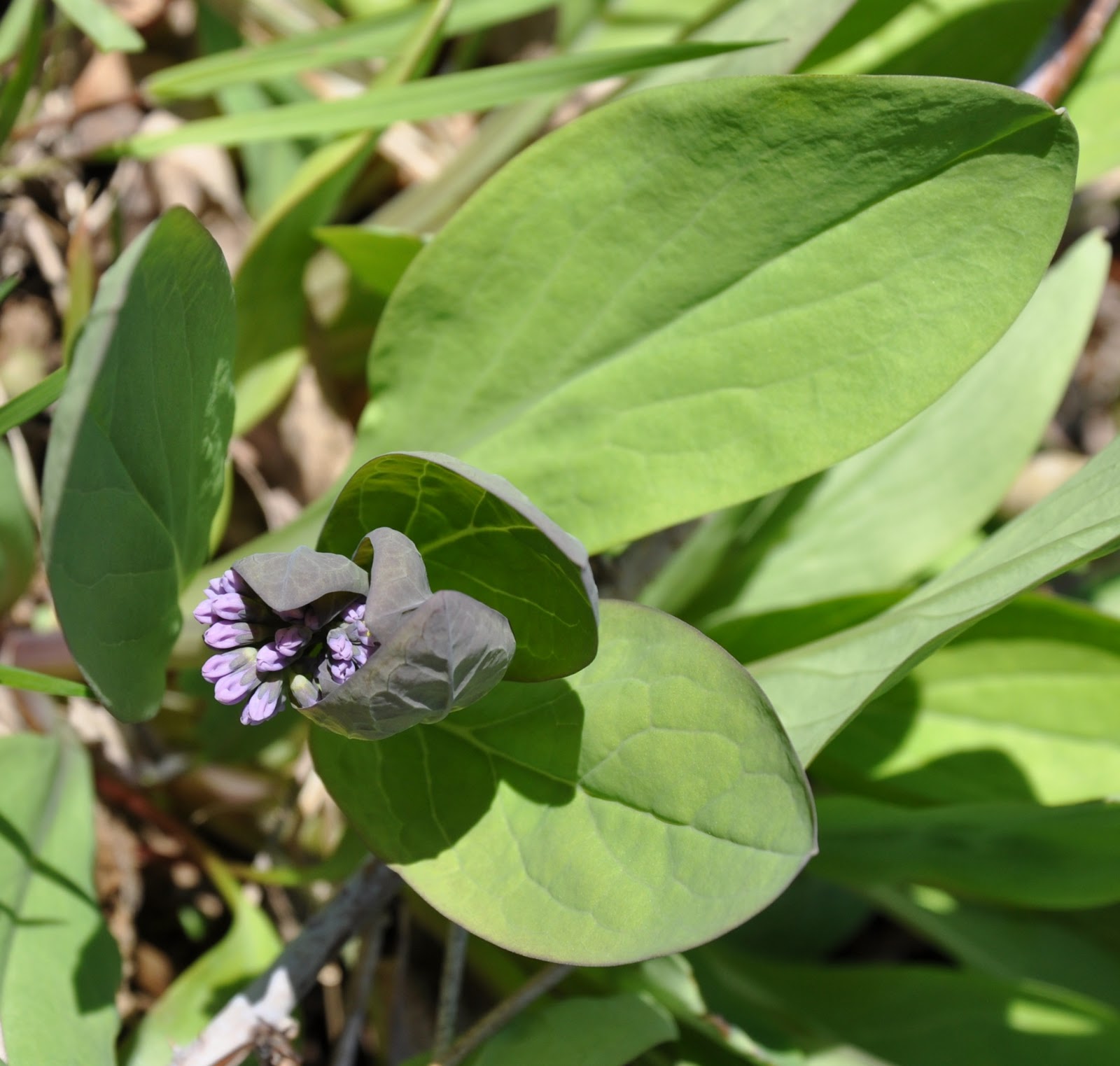
Bluebells making ready:


 Coltsfoot (thanks to Robert Leopard for identifying this one):
 Bloodroot:


APRIL DAFFODILS

Depending on weather, there may be good viewing or daffodils through April.  Two suggestions to see many in one location:

1)      Powder Mills Park – the daffodil trail is a one mile round trip – generally flat with one small uphill.  Enter left onto Park Road off of Route 96 (west of Eastview Mall). Your parking will be on the right at 9/10 mile – a small gravel lot just before the creek. There is a DAFFODIL MEADOWS sign at the parking lot.

2)      Marty Dodge’s home – thousands of Daffodils on Jones Road, Canandaigua.    
             Best times to view the daffodils would be Sunday, April 28th – Wednesday, May 1st.  Marty wrote: “I would have no problem with folks easing up the drive to see the extravaganza. I will be about Monday, Tuesday and Wednesday evenings at this point.”
             Please Email: Canandaiguabotanical@gmail.com for specific directions or phone number.  

City of Canandaigua Arbor Day tree planting

Here are photos of the 2013 Arbor Day planting...the 21st year that the City of Canandaigua has celebrated Arbor Day with a city tree planting.

Mayor Polemini reads the Arbor Day Proclamation

City Arborist, Chris Dorn, educates about tree planting.

This year's tree is a tulip tree planted at Atwater Park on Main Street

It is a bare root tree

Arborist Chris Dorn talks with City Manager David Forrest

 ************************************************
The 2013 City of Canandaigua Arbor Day Tree Planting will happen at 11:00 AM on Friday, April 26th.  Please join Mayor Polemini and Arborist Chris Dorn as a tree is planted at Atwater Park on Main Street near West Street just north of the train tracks.  Learn about tree planting and receive nice literature from the Arbor Day Foundation.
 In 2012 the Arbor Day Tree was planted 
in memorial to Maya Hobday 
at Sonnenberg Park on Howell Street

Lagoon Park Restoration Project WORKDAY

Thanks to Canandaigua Botanical Society President, 
Bill Bross for these photos...
 More than a dozen folks came to help including FLCC students,
 our new city manager, David Forrest
 Jim Engel,
 and Mayor Polemini
Things are coming along in the Restoration Project at the Lagoon Park in Canandaigua along Lakeshore Drive where several invasive species are being removed to encourage native species to flourish.  Thursday, April 18th will be a major planting and seeding day at Lagoon Park and YOU are invited to come lend a hand.  We will post more information as we get it...but plan to just show up on Thursday, April 18th and there's sure to be something for you to do!  Bring friends!

From the Daily Messenger on Wednesday, April 17th:


WHAT: Community planting day at Lagoon Park
WHEN: 9 a.m. to 3 p.m. Thursday, April 18
WHERE: Park at the Steamboat Landing parking lot (205 Lakeshore Dr.) and walk across street to Lagoon Park
MORE: Participants are encouraged to wear boots and gloves. Shovels, food and drink will be provided.

Please see comment below for the MPN article...